
[ultimatemember form_id=3702]
3. Workplace communication
The ability to communicate clearly and interact effectively with customers, suppliers, co-workers, enforcement officials and the public is an important part of being a professional truck driver. Effective communication begins with recognizing the barriers to good communication and using strategies to overcome them. Drivers use a variety of electronic tools to communicate and this unit provides a brief introduction to them.
This unit will help you learn to:
• Demonstrate clear and appropriate communication skills
• Explain how communication includes tone of voice, context, gestures and body language
• Practice sensitivity to cultural, ethnic and gender diversity
• Explain how to defuse situations that could cause anger, hostility or danger
• Provide good customer service
• Use communication technology appropriately
Interpersonal communication is the process that we use to communicate our ideas, thoughts and feelings to others. It’s not just about what’s actually said and the language used, but also how it’s said, and the non-verbal messages sent through tone of voice, facial expressions, gestures and body language.
Interpersonal communication can be accomplished directly (face-to-face) and indirectly (email, phone, voicemail, text). Successful interpersonal communication requires that both the message sender and the message receiver interpret and understand the message in the same way.
Communication is all about delivery. When you communicate, you can’t always be sure your message was understood or if you’re correctly understanding the sender’s message. Generally, workplace communication is best when it meets the six Cs criteria. This means that the communication is:
• Complete. You provide all necessary information and details.
• Concise. Say what you need to say to share your message, but be as brief as possible.
• Clear. Your message is concrete and specific, rather than broad and vague. Nothing is ambiguous or open to numerous interpretations.
• Coherent. Irrelevant details are omitted and the points are presented in a logical order.
• Correct. The information you present is accurate: names, dates, times, places, details and so on are right. If you’re typing, you’ve used the spell checker to eliminate errors. Read a written message out loud to yourself to make sure it sounds right.
• Courteous. Relationships with customers and co-workers are important if business is to run smoothly. Keep the tone polite and professional.
Your verbal message
How can you package and deliver a message and feel confident that the other person will pay attention? You need to match the message to the needs of the person receiving it.
Confusion can result from the verbal part of your message — the words you actually say — and by how you say it. In a study, it was shown that the emotional and non-verbal content of a message is as much as 93 percent of the message where the words themselves communicate only seven percent.
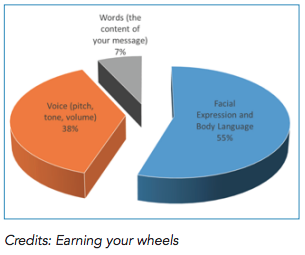
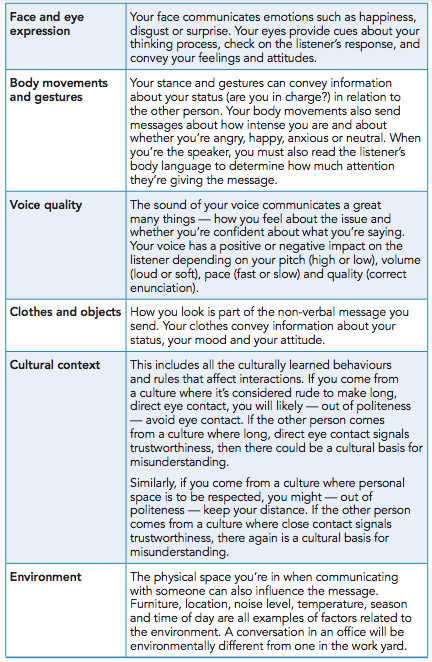
If your verbal message doesn’t match the non-verbal message, people generally believe the non-verbal one. Some elements of non-verbal communication are obvious — your tone of voice or deliberate gestures — but there’s more to it than that. Refer to the chart on the next page to see how complex it can be.
Listening
In your workplace, you’re required to be on the receiving end of communication. You need to block out external and internal noise and sometimes compensate for the sender’s lack of communication skills. Listening can be just as much of a challenge as speaking effectively.
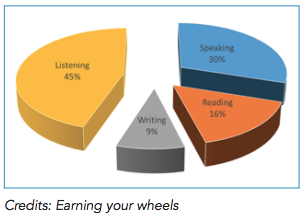
We spend a great deal of time listening. One workplace study found that most workers listen more than they read, write or speak — suggesting that it’s the most important of the communication skills. This chart shows that we spend 45 percent of our communication time listening.
The sender/receiver model also applies to other kinds of communication — written messages, phone messages and so on.
Barriers to communication
Effective communication ensures that business can be completed efficiently.
Poor communication can lead to costly errors, delays and interpersonal conflict. To be sure that you’re communicating effectively, it’s helpful to understand some of the common barriers to clear communication and to identify ways to overcome them.
External barriers
Some barriers created by the situation in which you’re communicating can include:
• Static on a phone or satellite connection
• Loud noises in the environment
• Communication equipment failure
• Poor quality print on documents
• Illegible handwriting
Vocabulary/language use barriers
In some situations, the words themselves can cause problems while communicating, leading to misinterpretation and misunderstanding. You may use a specialized vocabulary common to drivers or others in the trucking industry, but they won’t have meaning to people in other professions. Before you started this course, did you know that “bobtailing” means driving a tractor without a trailer attached? Or that “four-wheeler” is a term for a car on the road with you? Slang or other technical terms you’ll learn in this course are unfamiliar to many people.
Situational barriers
The most important rule of communication is to think about how and what you want to say so that the message gets through clearly. Take into consideration what you know about the person or group you wish to communicate to.
Age
Think about how a teenager talks versus an older person. While they both have a common language, they also use some vocabulary that the other might not understand. When you’re talking or writing to someone, think about their age and whether they would be comfortable with the terms you’re using, paying particular attention to slang.
Gendered language
Your job as a professional driver will have you interacting with people of varying generations, social circles, identities, ethnicities and experiences. Gender-inclusive language means speaking and writing in a way that doesn’t discriminate against a specific sex or gender identity and that doesn’t perpetuate gender stereotypes. Making your daily language gender inclusive and free of bias will ensure that you won’t offend the people you communicate with.
Remember that many people can be offended, not just by jokes that put down one gender or the other, but also by terms that can be used to misgender someone, including being addressed as either male or female (he, she, sir, lady, Mrs., Ms., Mr., Miss, girl, boy, guys, gals, fellows and so on). The gender-neutral “they” is now acceptable in writing and speaking rather than he or she. Creating gender-neutral conversation can be challenging, but noticing the habits within your conversation and how they’re prolonging harmful stereotypes can be an eye opening and transformative experience.
Physical appearance
We may not like the idea that we judge, and are judged, by our dress and appearance, but numerous studies have shown that this is often the case. We may misunderstand someone because of strong non-verbal messages sent by appearances or risk that someone may not pay attention to our message if they judge us not worth listening to.
Cultural attitudes
Our way of seeing things tends to differ between cultures and can lead to interference when we communicate with people from other cultures.
We can miscommunicate through gestures that are harmless in our culture, but offensive in another. We can stand too close or too far away. We can break etiquette rules about who speaks first. Similarly, when someone from a culture different from ours inadvertently breaks one of our rules, we may be offended when no offence was intended.
Listening well
Listening well is key to good communication.
Helpful tips to be a better listener:
• Don’t interrupt when someone is talking
• Eliminate distractions or ignore the ones you can’t avoid
• Move to a quiet place
• Recognize and tune out personal prejudices
• Focus on the speaker’s problems rather than your own
• Use your tone of voice and body language to reinforce the message that you’re listening
• Be open to hearing a person before assessing what they have to say
• Focus on the substance of the message rather than on the speaker or style
• If the speaker has an accent different from your own, it can be helpful to look at their mouth when they’re talking.
You can apply many of these strategies when receiving a written message as well. You need to compensate for spelling, punctuation or grammar mistakes, or long-winded sentences and focus on the substance of the message.
Answering questions
Responding to questions with clear, complete, and correct information is important.
Below are a few tips to help answer questions effectively:
1. Pause. In most cases, you don’t have to answer immediately. Think about what you’ve been asked and be sure that you were listening well.
2. Make sure you understand the question. Put it in your own words. For example, if you’re asked, “Can I have lunch here?” You might say, “Are you looking for a restaurant?” The reply will let you provide the right kind of response.
3. Think about giving one point at a time. If you provide too much information, the listener might have trouble following you.
4. Answer only what was asked.
5. Use simple, plain language.
6. Use precise language. Instead of saying, “The compressor is bad” you could say, “The compressor isn’t maintaining a consistent pressure.”
7. Check that the answer was thorough enough by asking, “Does that answer your question? Do you need clarification or more information?”
Defusing anger
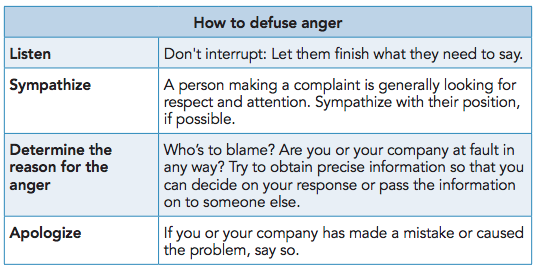
Below are some tips to use when communicating with difficult customers, coworkers or when in other situations involving conflict:
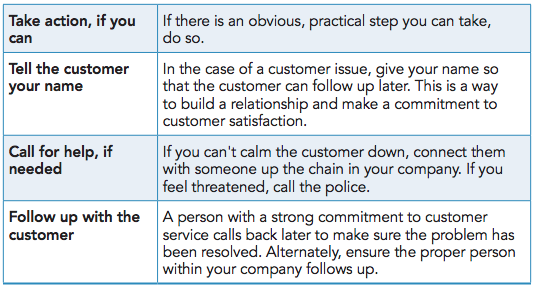
One sign of a professional in any field is the ability to use the language of the business with ease. To convey that you’re a professional driver, you need to learn to use the terms accurately and to use them in the right context. Keep in mind who you’re speaking to and decide whether that person is in the industry before you start using trucking-specific terminology.
You can’t learn all the language of the profession in this course, but you will get a flavour for the kinds of terms you’ll eventually use easily and readily.
Acronyms
Most professions deal with a number of organizations and they tend to have long names, which people shorten in conversation. Here are some examples of organizations that are involved in the trucking industry, which are often referred to simply by their initials:
BCTA – British Columbia Trucking Association
CTA – Canadian Trucking Alliance
ICBC – Insurance Corporation of British Columbia
TSCBC – Trucking Safety Council of British Columbia
NTAC – National Truckers Alliance of Canada
CVSE – Commercial Vehicle Safety Enforcement
You need frequent exposure to acronyms before you can begin to understand them. There are a few you can figure out if you have enough context. For example, based on what you’ve seen above, you could probably figure out that CVSA is the Commercial Vehicle Safety Alliance. Professional drivers work with numerous organizations and agencies. Once you’ve been working in the industry for a period of time, these sentences might make sense to you:
“I heard the CBSA was reviewing AMPS and FAST.”
“Did you hear that the CRA has changed the daily meal allowance limit?”
“I’m looking forward to our discussion of the Canadian TDG Act and HOS regulations.”
These may be a bit obscure to you right now, but once you’re more familiar, remember that when speaking with someone outside the profession, they might not understand when you use those acronyms.
What were those sentences about? Here’s the translation:
“I heard that the Canada Border Services Agency was reviewing the Administrative Monetary Penalty System (a penalty system that is designed to ensure compliance with customs regulations) and the Free and Secure Trade border crossing process (a special program to speed border crossing for frequent travellers).”
“Did you hear that the Canada Revenue Agency (the income tax department) has changed the daily meal allowance limit?”
“I’m looking forward to our discussion of the Canadian Transportation of Dangerous Goods Act and hours of service regulations.”
When you hear a new and unfamiliar acronym, just ask the speaker what it means. Eventually you’ll become familiar with frequently used terms.
Technical terms
Throughout this course, you’ll learn new technical terms that relate to the components of a truck, different loads, regulations and driving techniques. You need to learn many of these terms to communicate effectively with co-workers, dispatchers, maintenance technicians and the various officials you’ll interact with. Your comfort using these terms is evidence of your knowledge of the profession. Look up unfamiliar terms in the appendix or a dictionary and when speaking with others in your industry, don’t hesitate to ask them what the term means.
An example would be “fifth wheel.” This is a device used on most tractor trailer units to attach the truck and trailer to each other. This attachment was first designed back in the 1850s to be used on four-wheel, horse-drawn carriages and wagons to allow the front axle to pivot.
Customer service
Providing good customer service results in improved business opportunities for you and your company and demonstrates professionalism that customers and your employer expect. A professional driver understands the principles of customer service, handles difficult situations calmly and leaves a good impression of themselves and their company.
Customers generally expect to deal with professional drivers — those who are prompt, courteous, polite, helpful and easygoing. Companies set up rules and procedures to improve and keep business and to help drivers achieve that level of professionalism that customers are looking for.
One of the most important components of providing customer service is to follow company policies for cargo and freight documentation, for dealing with freight problems and customer complaints.
When you arrive at a customer’s loading dock, you’re a representation of your company. They don’t know how things happen back at the office, exactly what you are or aren’t responsible for, or what you personally can or cannot do for them. All of that is your business, not theirs. They expect you to understand how the system works and to answer their questions, solve their problems or put them in touch with just the right person.
Thinking about these three basic questions will help you provide good customer service:
1. What do customers want from you and from your company?
2. How do the support areas (back at the office) work to serve the customers you see face-to-face and how should you work with them to ensure good service?
3. What are the details — the small things that make a difference to the customers you see?
For business customers, service has three components:
1. Formal commitments. Through contracts, letters and published policies, your company makes service commitments to its customers who expect them to be honoured. When possible, you should know what these promises are so that you can handle complaints.
2. Common expectations. Based on their experiences with other carriers or in other business relationships, customers develop expectations about how your service should be provided. You may not even know what these expectations are, but if you don’t meet them you might disappoint the customer. Discussing them with a customer will help you to determine whether you can meet these expectations.
3. Personal commitments. These are the promises that you make yourself such as, “I’ll call dispatch to see where that second truck is now.” These are the ones that you’re in charge of and where you can make a difference to your company’s customer service. These interactions help build your company’s reputation for good or bad customer service.
Customers make judgements based on how you interact with them. One of the ways that you can deliver good service is to think before you respond and use a polite and courteous approach when handling a problem situation.
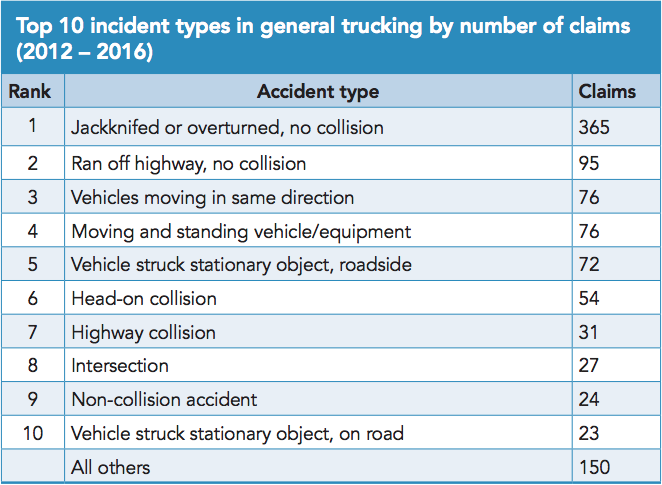
In general, customers evaluate the service they receive by looking at these factors:
Efficiency
Customers look for quick, correct service. The right goods, the right information, the right paperwork, the right bill, delivered on time to the right place and so on.
Confidence
When customers ask you for something, they expect you to be able to provide it whether it’s information, service or assistance. They’ll have a good impression of you if you give a response with confidence and authority. If you seem unsure, you might create a bad impression.
Helpfulness
This trait is usually considered to be a bonus. You can be helpful if you point out to a customer how they could get better service or work more effectively with your company. Or, you can be helpful if you provide information or a service that the customer didn’t know they wanted.
Personal interest
If you see the same customers over and over again, you may develop a relationship with them. Customers generally respond well to the company representative who shows an interest in them, their business needs and their concerns. If there’s a problem to solve, they look for the individual who takes a personal interest in getting it solved.
Reliability
Customers like to know that they can depend on you so they look for consistency in your service. They look for companies that are committed to responding to customers’ inquiries and service requests.
Providing customer satisfaction
Customers can be frustrated and angry when delays or errors occur. As the only person customers may see face to face, you’ll often be the person they voice their complaints to. It’s easier to handle these situations if you have a few guidelines for customer service.
Who are your customers?
As a professional driver, you’ll meet customers when you make deliveries or pick up a load. You must practice good customer service skills when you interact with anyone you meet at a customer’s site. This includes people at every level from the dock workers and dock supervisors to the company manager. In each interaction, you leave an impression of your company.
You must also be aware that you have “customers” inside your own company, too. As a driver, you have to work with and provide service on behalf of dispatchers, operations managers, billing administrators and others. If you’re an owner-operator, then the company to which you contract yourself becomes your customer. It’s sometimes easy to forget that our co-workers are customers who deserve to be treated with the same respect as outsiders. You’re maintaining the reputation and image of professional drivers by providing them with good service. If doing their own jobs well depends on your work being done professionally, then they’re your customers.
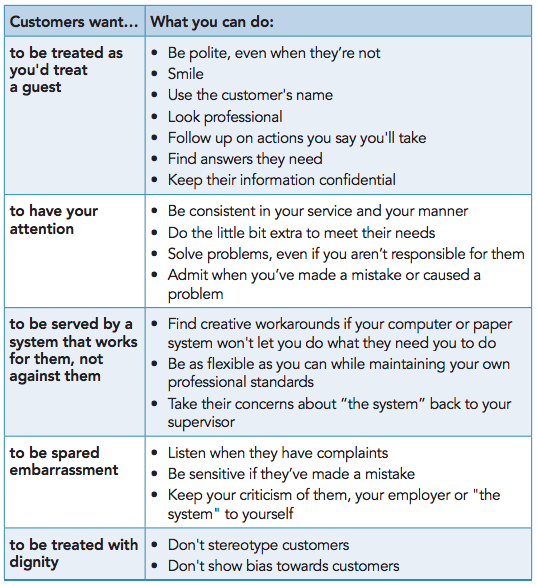
What do customers want?
You can provide better customer service if you know what your customers are looking for. The following chart identifies some expectations a customer would have and some tips on how to meet those expectations.
There are some communication guidelines that are specific to each of the communication tools used in trucking. This section looks at some of the most common communication technologies you’ll encounter and the proper etiquette to follow when using them:
• Cell phones and voicemail
• Computers and e-mail
• Satellite tracking and communications systems
Cell phone etiquette
With cell phone technology, people can communicate almost anywhere. Just because you can, doesn’t mean you should. Here are some do’s and don’ts for using cell phones to communicate effectively and courteously.
Don’t
• Subject other people around you in a confined space (small room, elevator) to your conversation. Wait until you can be in a quiet, private location.
• Set your cell phone ringer and tone to a loud, annoying tune.
• Dial while driving. Use voice-activated dialling or pull over to make that call.
• Take a personal call when you’re discussing something with a customer.
• Have emotional conversations in public.
Do
• Pull over to make your calls, when possible.
• Maintain a 3 m zone around yourself while talking on a cell phone.
• Keep calls brief and to the point.
• Tell the person at the other end where you are or what you’re doing, so they can anticipate distractions or problems while talking to you.
• If you’re on speakerphone and you’re not alone, inform the caller that others are present.
Voicemail tips
Voicemail systems can increase efficiency in today’s workplace, but only if they’re used effectively. A message that just says, “It’s me, call me back” doesn’t help to exchange or request information.
Here are some tips for leaving voicemail messages:
• Identify yourself, speaking slowly and clearly and give your name and company.
• Leave your telephone number, even if you think the other party already has it. They may have misplaced it and leaving your number makes it easier to call you back quickly.
• Make your message clear, concise and complete. Leave all the details the listener will need to call you back with the information you need.
• Speak slowly so that the listener doesn’t have to replay the message. Be clear about when you need a response, especially if the information is needed to stick to your timelines.
• Say when they should call you back, remembering differences in time zones.
Using email
Here are a few tips to help you manage your email:
• Read your email on a regular basis.
• Delete any unnecessary messages after you read them. You can save the ones you’ll need to refer to again, but many can be deleted.
• Remember email messages are not necessarily private. Don’t write anything that you wish to remain confidential.
• If you receive a message addressed to a group, it’s sometimes better to reply to one person from the group rather than “reply all” and send the message to the whole group.
• Keep it neat and use spell check.
Email etiquette
To communicate effectively through email, consider these guidelines:
• Be concise and to the point.
• Long documents should be sent as attachments, which can be printed out if required.
• Check spelling and grammar to keep a professional image.
• Answer emails as quickly as you can. Most people expect emails to speed up business, not slow it down.
• Don’t attach big and unnecessary files; send only what the receiver needs.
• Don’t overuse the “high priority” flagging options.
• DON’T USE ALL CAPITALS. IT SEEMS TO THE READER AS IF YOU’RE SHOUTING.
• Read your message before you send it, checking for missing words and confusing language.
• Use a subject line that’s meaningful to the receiver. This can help them identify what the message will be about so they can decide on its importance.
• Don’t send material that’s not business-related (jokes or videos for example) without getting permission first.
Communicating via satellite systems
Much of a driver’s communication takes place using specialized communication tools, which brings their own challenges to communicating effectively.
Many carriers today use a satellite or cell-based system for electronic communication between drivers, dispatchers and clients. These systems combine satellite communications links, landlines in some cases and on-board computers in cabs and trailers to manage fleet efficiency. Depending on the size of the fleet and the nature of the work the company does, they may use a very complex system or a simpler one that does fewer tasks. Most systems are modular and individual carriers can choose which modules they wish to use.
Driver communication
For the driver, the introduction of these systems means that some of your record keeping is electronic rather than paper based. When these systems are installed, they also increase the ease and frequency of two-way communication between the driver and dispatch, as well as with other people.
Most systems:
• Allow two-way voice communication between drivers and dispatchers.
• Provide voice and email communication between other users of the system.
• Let drivers access company information such as payroll data, customer details and can even provide driving directions and maps.
• Include an electronic log book function.
Devices
In your truck, you can expect to use a small device with a keyboard and display screen to do a variety of tasks. The device may also include a microphone and speaker because it may be used for both data and voice communication. This is your on-board computer. It communicates through a Global Positioning System (GPS) and may have a cell phone component as well. Back at the office, company staff can see the information your unit sends on their regular desktop computers and they may also have a voice and speaker system that works with your system.
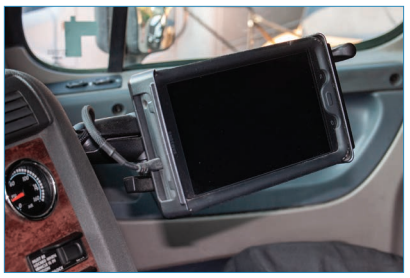
The features available to the driver vary depending on which product your employer uses, but your on-board computer will allow you to do some or all of these things:
• Complete your log book electronically, with some entries made automatically
• Perform routine calculations (for example, fuel tax and mileage)
• Record border crossings
• Monitor your hours of service
• Help with navigation and route planning through the GPS functionality
• Record details on an electronic work order
• Send company and possibly personal email
While the technology that operates these systems is sophisticated, using the technology is not complicated. The driver enters standard information, basically filling in the blanks and the equipment does the rest. Most of the units have a standard keyboard, the same as on a computer, and some systems use the same Windows interface that you find on some desktop computers, making it easy to learn how to operate them. Some of the newer units are simply tablets with a variety of apps loaded on them.